
If you are reading this then you have likely purchased miso at least once — a tub you brought home, took out what you needed, and put back in the fridge where it will remain behind your jar of chili crisp and dijon mustard waiting for your next soup craving.
That tub has so much potential, and deserves much more than simply being relegated to the back of the fridge.
People often say “miso” thinking they mean “miso soup.” It is easy to associate miso specifically with soup based on previous experience — when someone says “flour” one thinks bread, not cake or cookies. While they are both baked goods that use flour, there are many types of baked goods you could make that contain flour. The same is true with miso; because it is an ingredient and you can do so much more with it than just soup.
Growing up in the USA, even though my mom was Japanese, miso mainly meant soup for us — until I moved to Japan and learned that it is much more than a single-use ingredient.
In grocery stores throughout Japan, there are aisles dedicated to miso. Each area has different varieties: light and dark, wet, fruity, and funky, and some very aged varieties.
I began to see different ways miso can be used, including glazes for grilled tofu, whisked into salad dressings, and even as a brine for curing or pickling meats, fish, and vegetables. It is an all-purpose condiment, as basic as salt or soy sauce.
What is actually in the tub?
Many kinds of miso have different variations, but at its core the main ingredients are soybeans, salt, water, and kōji. You know about the soybeans, salt, and water, but it is the kōji that is essential to making miso.
Kōji is a filamentous fungus grown on rice or barley. It breaks down proteins and starches by producing two types of enzymes. Proteolytic enzymes break proteins down to amino acids, which creates the abundant umami flavor in miso. Amylases convert starches to simple sugars, giving miso its natural sweetness and balance.
There are many regional differences in ingredients and how miso is made, resulting in a large variety of flavors and textures. One way to find your way around is to look at how long it has been aged.
White miso (shiromiso or Saikyo) ferments for two to three days. It is smooth, creamy yellow, and has a mild, sweet taste.
Yellow miso (tanshokumiso) is the most prevalent and ages for several months, resulting in a darker tan color with a richer flavor and nuttier complexity.
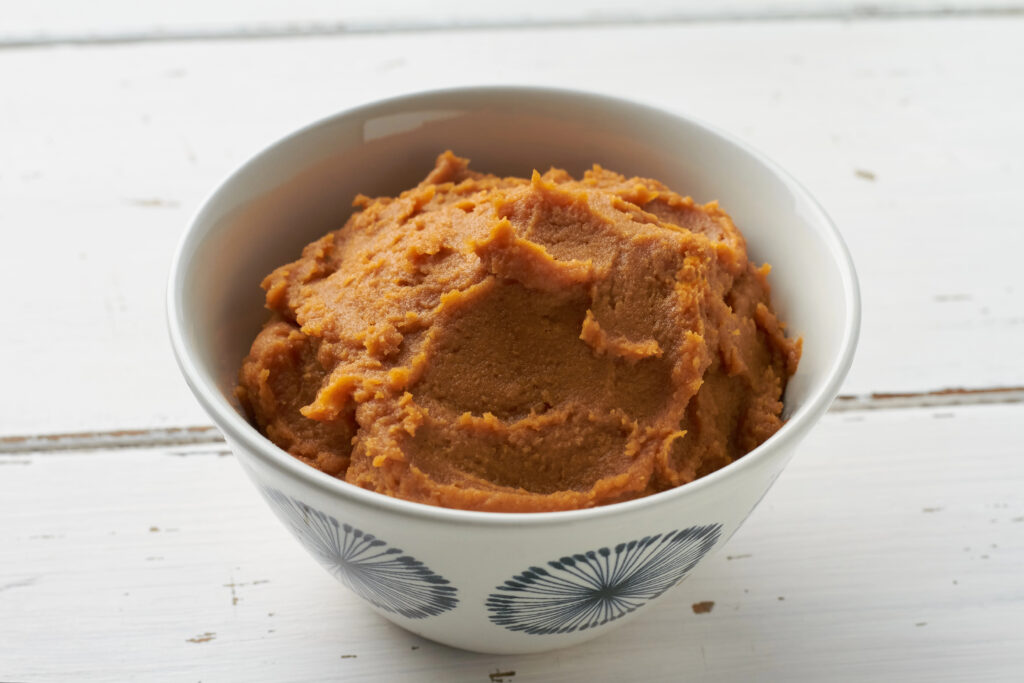
In the United States, yellow miso is often incorrectly labeled “white miso,” but you can tell the difference by looking at the color of the product.
Red miso (akamiso) is aged for up to two years, developing a chestnut brown to near-black color with complex earthy flavors and rich umami.
Miso also has unique qualities that make it a versatile cooking ingredient. Because miso paste is sticky and water-based, it clings to the surface of food and allows other ingredients to dissolve into it without burning or overcooking.
Additionally, since miso is derived from soybeans, when combined with fat and water from meat broth it acts as a natural emulsifier, allowing you to create creamy soups and sauces. Miso ramen is a good example of this — unlike soy sauce ramen, which has flavor but lacks a velvety texture, miso ramen has both.
Japanese chefs have been well aware of this for hundreds of years and have created many ways to use miso throughout their traditional culinary repertoire.
As a marinade, miso is an effective way to flavor and tenderize food. As a glaze, it adds color and flavor to meats and fish, as seen in miso-glazed black cod. Ginger miso pork uses the enzymes from both kōji and ginger to quickly tenderize thin pork chops.
Miso works as a dip for raw vegetables, or as a topping for tofu and rice when thick and nutty. Mixed with mirin, it becomes a sweetened glaze for dishes like teriyaki. You can also quickly fry ground meat with miso to use as a topping for rice or noodles. You can also roast eggplant and use miso as a glaze for nasu dengaku.
If you are using unpasteurized miso with live probiotics, you will get the greatest health benefits by not cooking it. A yuzu miso glaze — made with Korean yuja-cha, a yuzu marmalade — is wonderful on grilled or sautéed fish and avocado. Miso is also a good emulsifier for salad dressings, helping them cling to lettuce leaves rather than pooling at the bottom of the bowl.
Miso adds depth to a surprising range of dishes.
You may not be able to detect its flavor outright, but the resulting dish tastes more “complete.” It works well in bolognese sauce, stew, macaroni and cheese, and chili. Miso provides the same flavor-enhancing qualities that good stock does, and a tub will last a long time in the refrigerator.
Once you start thinking of miso this way, you can begin to see many other uses for it. Umami isn’t only about savoriness — it also makes dishes taste more complete. Both chocolate and dairy contain amino acids and nucleotides that carry umami, which is why miso works so well in desserts. It can be used as a substitute for salt in caramel sauce, and adding miso and browned butter to chocolate chip cookies adds depth and richness without being overly salty.
I challenge you to find the container of miso hiding in your refrigerator, or put it on your grocery list. The next time you cook a dish that could use more depth or richness, try adding a spoonful. You’ll likely find that many of your favorite dishes were just begging for miso.