
There’s a myth that all fish labeled “sushi-grade” can be safely consumed raw. This label is used by many retailers because it gives customers a sense of comfort; however, there is no legal definition of what constitutes sushi-grade fish, nor is there any governing body in the United States that certifies particular fish as safe to be eaten raw.
The term is simply a marketing phrase.
Even when eating sashimi, crudo, carpaccio, ceviche, or tartare, raw seafood will always present some degree of risk. If you are pregnant, have an immune system disorder, are very young, or are older, it is best not to consume any of these items.
For others, the question is not whether sashimi is safe but rather how to reduce potential hazards in order to eat it without worry.
In many ways, there are no black-and-white answers when it comes to the safety of eating sashimi; it is a continuum that depends on the processes used to bring fish to market and the transport conditions that take place before it arrives at your plate.
As a chef, I have purchased raw seafood from numerous continents, and I have a few simple means to evaluate whether or not I will serve raw seafood.
What Risk Means
When considering the consumption of raw seafood, there are specific risks associated with the type of seafood consumed.
The primary risk associated with fin fish is the presence of parasites, specifically the parasitic larvae Anisakis, which can cause severe abdominal pain if ingested live. High-risk species include wild salmon, squid, and oily fish such as mackerel, cod, and sardines.
The solution isn’t complicated: purchase flash-frozen seafood per FDA guidelines and select sustainably harvested frozen fish for sushi.
Foodborne pathogens such as Vibrio, Listeria, and Salmonella may also be present in seafood, leading to illnesses that generally last less than a week but may pose a serious health risk for people with weakened immune systems.
Shellfish — especially filter-feeding bivalves like oysters, clams, and mussels — are at risk for Vibrio contamination regardless of handling. Listeria and Salmonella commonly contaminate seafood through improper handling and storage.
Histamine poisoning occurs when fish such as tuna and mackerel are not chilled fast enough after catch. Bacterial conversion of naturally occurring histidine to histamine results in symptoms such as flushing, hives, headache, and nausea. Cooking does not eliminate histamine — the only preventive method is rapid chilling.
Ciguatoxin is a toxin that builds up in reef fish such as barracuda, grouper, and large snapper, causing ciguatera poisoning with severe gastrointestinal and neurological symptoms that can persist for months. Cooking does not eliminate it, and there is no simple test for it, so the only way to avoid ciguatera is to stay away from high-risk species altogether.
Once you understand the dangers, here are the four S’s to keep in mind when purchasing fish and lowering the chance of contamination:
1. Source — Find Someone You Trust
The simplest and most reliable approach is having confidence in your supplier.
A good supplier is aware of their source, maintains cold storage and proper hygiene, and will have already considered all of the items on this checklist before designating a fish as sushi-grade. The fishmonger you’re evaluating should know which fish have been frozen for parasite control, segregate raw-ready fish from everything else to avoid cross-contamination, and be able to tell you where the fish came from and when it was received.
When evaluating a fishmonger, I like to ask directly: “Would you consider this fish safe to eat raw?”
The answer, and the reasoning behind it, tells me what I need to know. If they have segregated cases for sashimi, a transparent sourcing process, and can speak passionately about their products, I have confidence in them.
Red flags include a shared area for sashimi and cooked seafood, and vague answers to basic questions. If you do not have confidence in the source, walk away.
2. Species — Know Your Fish
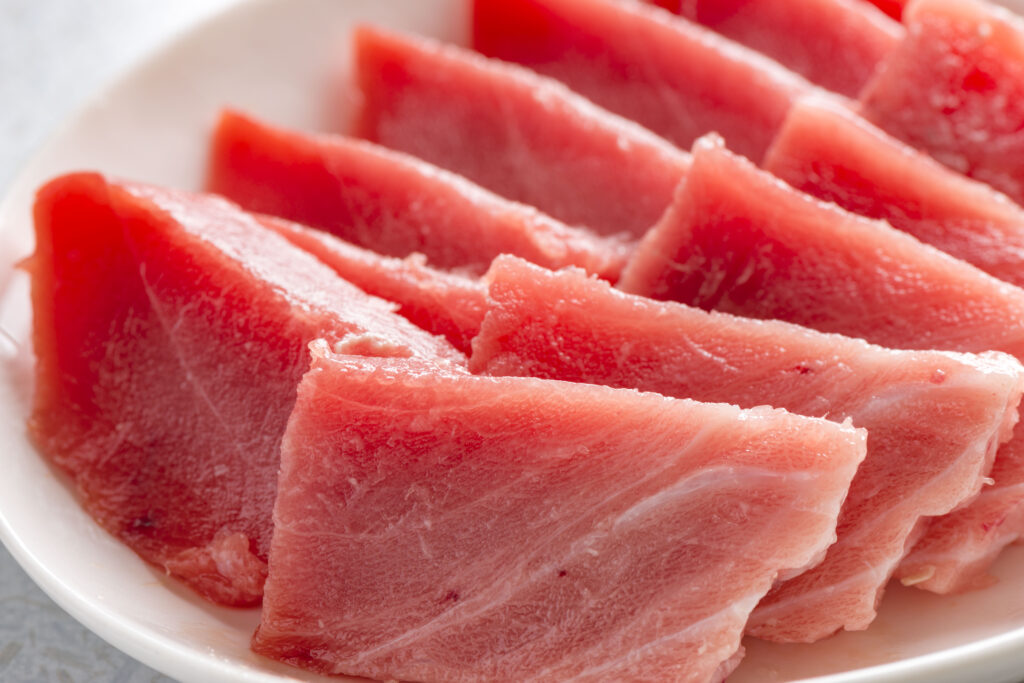
Tuna species such as albacore, yellowfin, bigeye, and bluefin are among the least likely fish to harbor parasites and are generally considered lower risk for raw consumption.
Fish from aquaculture are also lower risk because they do not have the opportunity to ingest parasites through their food sources.
For other species such as salmon, squid, and mackerel, there is a greater chance of parasites unless the fish has been properly frozen following FDA guidelines.
Most home freezers do not operate at a low enough temperature to kill parasites, so it is always best to purchase fish that has already been commercially frozen. Ask your fishmonger whether the fish has been frozen to destroy parasites.
3. Subzero — Understand the Freezing Requirements
According to the FDA, the acceptable methods for parasite destruction are: freezing at -4°F (-20°C) for at least 7 days, OR freezing to -31°F (-35°C) until solid and maintaining that temperature for at least 15 hours, OR freezing to -31°F (-35°C) until solid and storing at -4°F (-20°C) for at least 24 hours. The FDA lists no other methods of parasite control as acceptable.
4. Swift — Don’t Break the Cold Chain at Home
By using good sourcing and species selection, you have already reduced your overall risk. Now don’t undo that at home.
When grocery shopping, always pick up your fish last and pack it on ice so you can go directly home to prep it. Sanitize your cutting boards and knives with alcohol or heat to avoid cross-contamination. Keep preparation time to a minimum and serve seafood in small amounts so it doesn’t sit at room temperature.
The main goal is to keep everything as cold as possible until the moment it is eaten.
Putting It Into Practice
If you want to start with something exceptional, my favorite preparation is kanpachi carpaccio — Greater Amberjack served with high-quality olive oil, well-aged Pecorino Romano, and a touch of sansho peppercorns.
For something bolder that requires no special knife skills, Kimchi-Cured Salmon is a great starting point. Curing salmon with fermented napa cabbage and seasonings firms the texture and adds tremendous flavor. While curing frozen fish won’t meaningfully improve food safety, it does wonders for the texture of previously frozen fish.
Hyugadon is a regional dish from Oita Prefecture in southern Japan, where toasted and ground sesame seeds and sweet soy sauce are combined to create a marinade for tuna or any fish already set aside for sashimi. Served over a bowl of rice, it’s a simple, deeply satisfying dish that has been a comfort food for fishermen in that area for centuries.
For a more social occasion, Temaki Sushi — hand rolls — is one of my favorite ways to share raw fish with friends and family. Think of it like a pizza party, but with nori, rice, and fresh fish in place of dough and toppings.
When Shopping
Always keep the four S’s — Source, Species, Subzero, and Swift — in mind when purchasing fish for raw consumption.
The goal is not to eliminate risk entirely, but to understand it, know your personal tolerance, and use that knowledge to create a confident and enjoyable experience at the table.