
If you picture teriyaki sauce as a thick, brown liquid poured from a bottle over a pile of grilled chicken in a Styrofoam takeout box, then you are likely mistaken in how you think about teriyaki in general.
Teriyaki is older than the United States and while it has long been associated with Asian culture, the way most Americans know teriyaki is completely different from how most Japanese people think of it — and most Japanese people associate teriyaki with the city of Seattle rather than Tokyo or Osaka.
To clarify, teriyaki does not mean sauce; it is actually a cooking method.
The Japanese words teri (照り) (meaning to have luster or shine) and yaki (焼き) (meaning to grill or broil) combined create something closer to “shine-grill” than soy sauce flavoring.
The primary purpose of adding shine is what traditional teriyaki cooking is all about. Traditional teriyaki cooking consists of brushing a thin glaze repeatedly onto a piece of fish or meat as it cooks over heat, allowing the sugars to build up layer by layer and create a shiny, lacquered appearance on the finished product.
This technique was first developed by Japanese cooks in the Edo period (1603–1868) for use with fatty fish, primarily yellowtail, mackerel, salmon, and skipjack tuna. In Japan, chicken teriyaki — the standard for Americans — did not come around until years later, while beef teriyaki is not a recognized dish there.
Therefore, if a recipe blog tells you to “marinate chicken in teriyaki sauce for 30 minutes before baking it,” this would not be considered teriyaki by any Japanese chef — it would be considered chicken marinated in teriyaki-flavored sauce.
There are only four ingredients that make up a traditional teriyaki glaze: soy sauce (shoyu), mirin, sake, and sugar (though sugar is sometimes omitted because mirin typically has a sweetening effect).
None of these ingredients includes garlic, ginger, sesame oil, brown sugar, or cornstarch slurry — all ingredients that are sometimes used in the American interpretation of teriyaki.
Each of the four ingredients serves a specific purpose.
Soy sauce provides the salty, umami flavor base, while sake adds depth of flavor, tenderizes proteins, and during cooking burns off its alcohol to provide additional complexity. Mirin is a sweet, syrupy rice wine with lower alcohol content and higher sugar content than sake, providing both mild sweetness and the teri — the shiny glaze — of the finished product.
Sugar, if added, will further enhance glossiness and caramelization.
A thick “sauce” in the traditional American sense does not exist in Japanese teriyaki. The teriyaki glaze is usually a thin, almost watery liquid that thickens as it reduces and boils away. All of the shine and stickiness on a completed dish is the result of glaze absorbed into the food during preparation, not sauce poured over it at the end.
The garlic and ginger found in almost every American “teriyaki” recipe have always been thought of as enjoyable additions; however, in Japan they would typically be regarded as unusual or extraneous, as they were not part of traditional Japanese teriyaki.
Bottled teriyaki sauce has no place in traditional Japanese cooking.
When people learn that teriyaki is just a normal home-cooked meal for most Japanese people and that there is virtually no bottled teriyaki sauce sold in Japan, most are pleasantly surprised. The Japanese Cultural & Community Center of Washington states: “A majority of Japanese consider ‘teriyaki’ to be a ‘home-cooked’ meal: every family creates its own recipes for teriyaki.”
Bottled teriyaki sauce would be analogous to bottled Italian dressing — the main difference being that Italian dressing at least originates from Italy, while bottled teriyaki sauce is an American invention.
What is often perceived as teriyaki sauce originated in Hawaii, through Japanese immigrants living there during the early to mid-1900s. They took the simple ideas of shoyu, mirin, and sugar and localized them, incorporating pineapple juice (which contains bromelain, helping to create sweetness and tenderize meat), brown sugar, fresh ginger, garlic, and green onions. The resulting fusion became incorporated into the Hawaiian plate lunch and eventually made its way to the mainland, helped along by two major influences.
Kikkoman originally had trouble marketing their soy sauce to Americans.
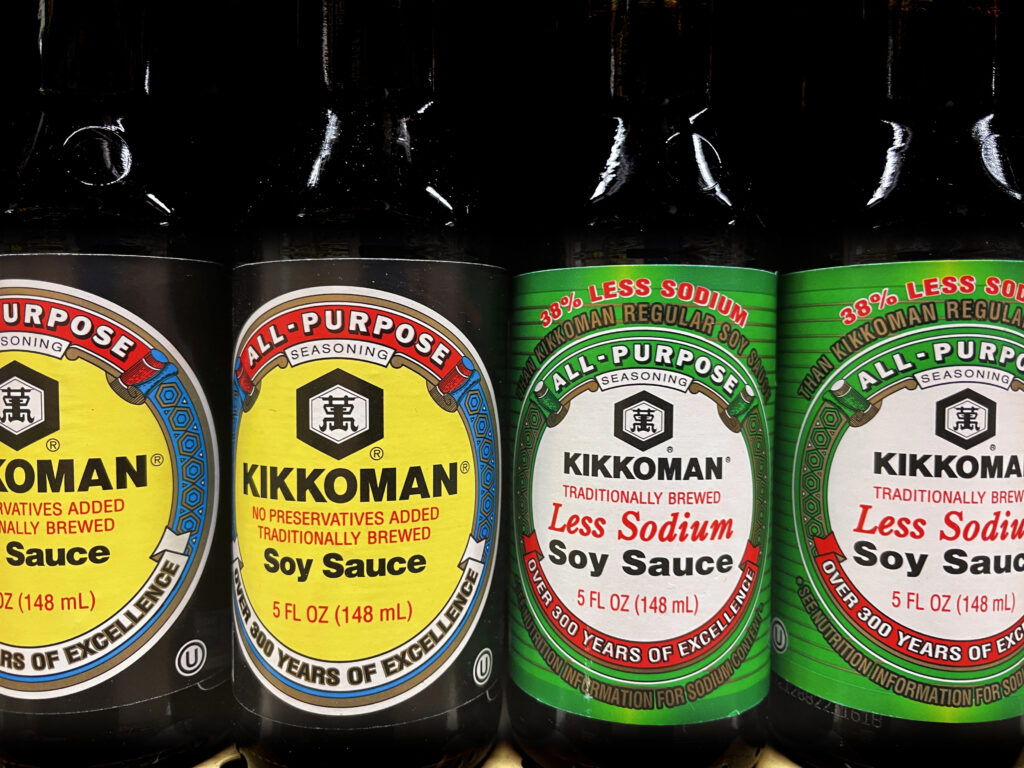
In the 1950s, they began selling to non-Japanese households but struggled to move teriyaki soy sauce. Kikkoman’s marketing department created a sweet sauce to appeal to Americans who loved to barbecue, launching their Teriyaki Barbecue Marinade in 1961 with ads declaring “Teriyaki Has Become an American Dish.” It remains one of their best-selling products today.
The other major factor was the city of Seattle.
Toshi Kasahara, a Japanese immigrant, opened Toshi’s Teriyaki Grill — Seattle’s first dedicated teriyaki restaurant — in 1976. It was affordable, quick, grilled over charcoal, and so good it was considered addictive.
By the mid-1990s, there were more than 100 teriyaki restaurants in Seattle, and by some estimates closer to 175. Because of this proliferation, “Seattle-style teriyaki” emerged as a distinct regional cuisine, now comparable to Chicago-style deep dish pizza or Texas barbecue.
According to Seattle Weekly, Seattle-style teriyaki is a fusion of Japanese, Korean, Chinese, Vietnamese, and European culinary traditions, with one of the most significant influences being John Chung, a Korean-American.
American teriyaki is therefore truly a fusion of many cultures, with its roots firmly planted in the Pacific Northwest. As an interesting footnote, Kikkoman’s marketing success with American teriyaki was so effective that they reintroduced the dish back into Japan — meaning that in Japan today, you are more likely to find teriyaki chicken at American fast-food outlets than at traditional Japanese restaurants. One Japanese-American writer, after polling his coworkers in Tokyo, found that virtually all of them associate teriyaki chicken with fast food. American-style teriyaki may not be traditional, but it was created by Japanese immigrants and is certainly delicious.
If you are looking for an authentic teriyaki dish, it is as easy as combining equal parts soy sauce, mirin, and sake with a spoonful of sugar, applying it to your fish or chicken while it cooks, and allowing it to reduce until it becomes shiny. You do not need to buy a bottle, nor do you need cornstarch, garlic, or pineapple. The mirror-like glaze is how the dish got its name.